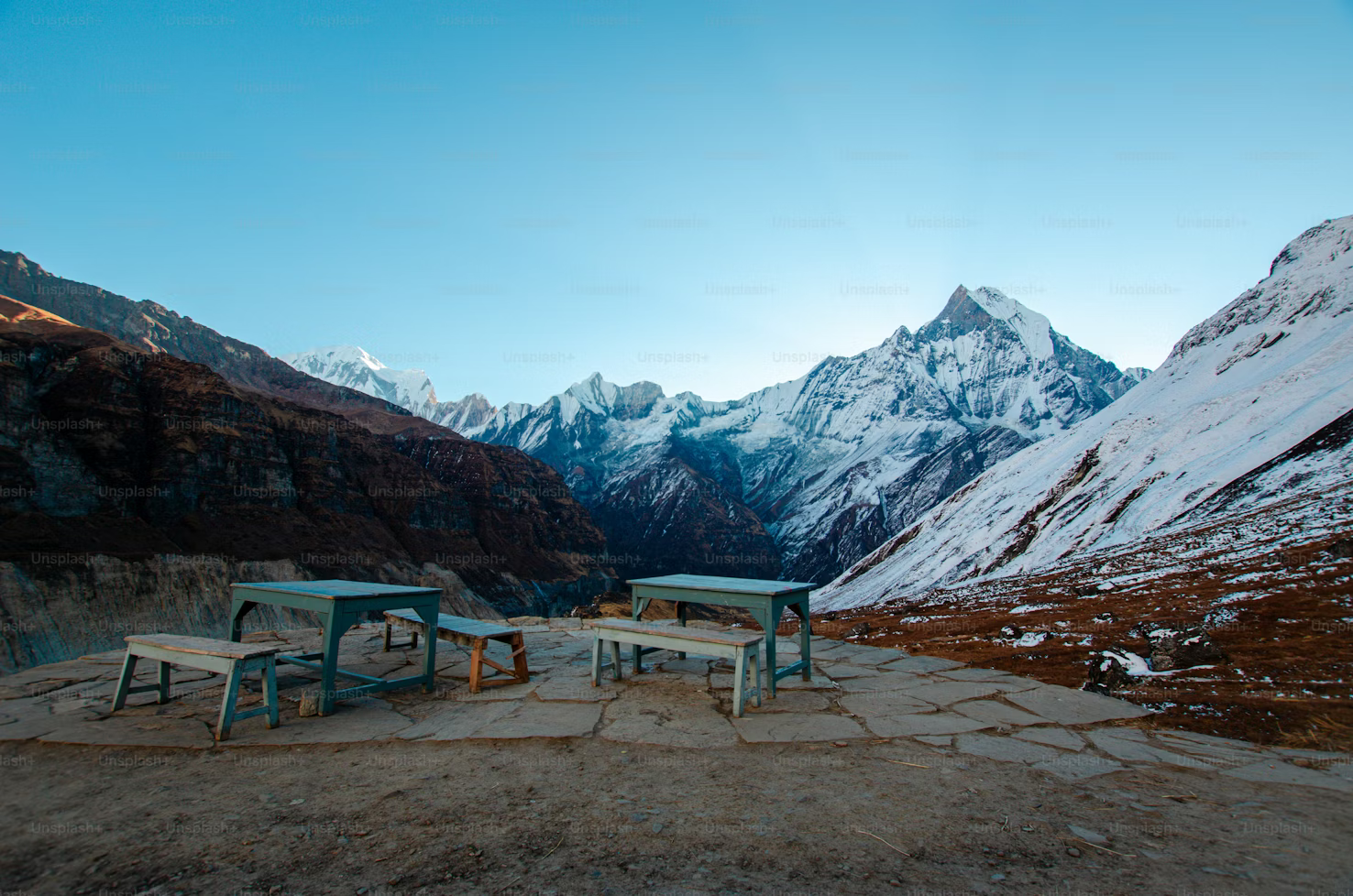
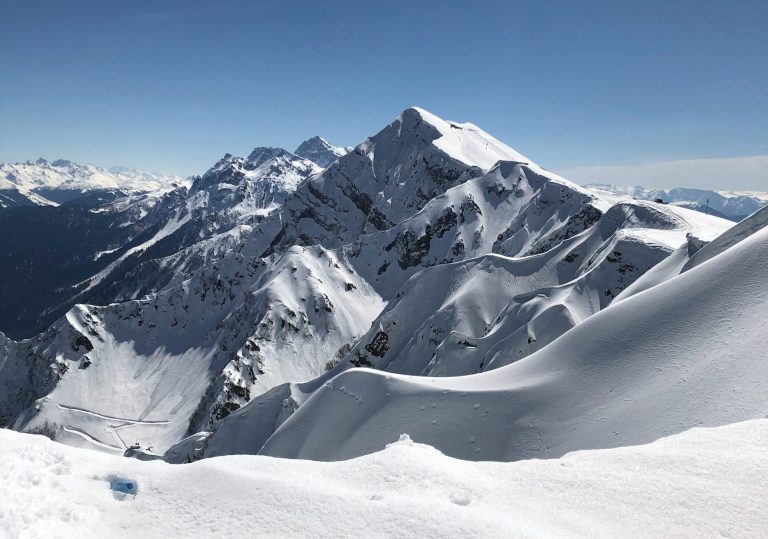
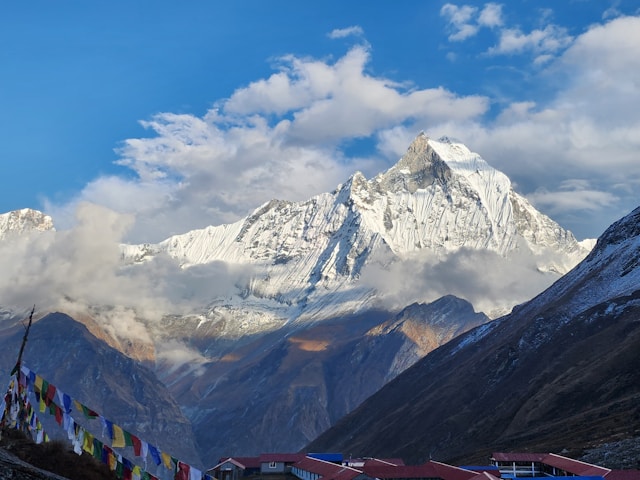
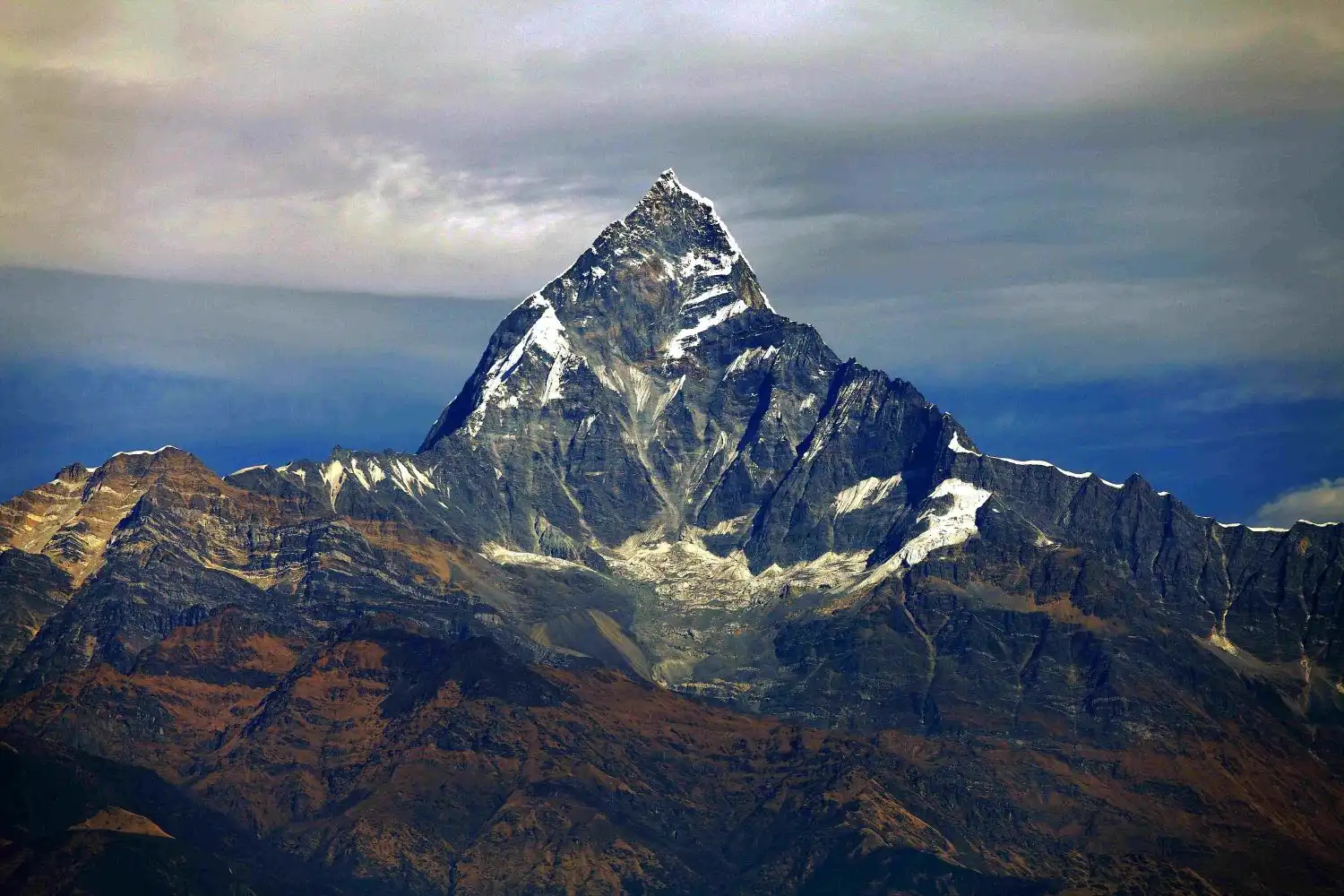
Hidden close to the vast Tibetan Plateau, Upper Dolpo is one of Nepal’smost remote and least explored Himalayan regions. Far from modern influence, this untouched land offers raw natural beauty, deep silence, and a sense of peace that is increasingly rare in today’s world. If you seek true wilderness and spiritual calm, Upper Dolpo is a journey that speaks directly to the soul.
The Upper Dolpo Trek lies in a restricted area, requiring special permits, which helps preserve its pristine environment and ancient culture. Opened to trekkers only in 1989, the region is protected within Shey Phoksundo National Park, home to the breathtaking Shey Phoksundo Lake—famous for its striking turquoise-blue color and remarkable depth.
Beyond its dramatic landscapes, Upper Dolpo is a living museum of authentic Tibetan culture. Remote villages, ancient monasteries, prayer flags, and centuries-old traditions remain beautifully intact. The trail passes through high alpine terrain dotted with colorful shrubs, whilelower valleys unfold into lush green meadows. This untouched habitat isalso home to rare wildlife such as blue sheep, Himalayan musk deer, andthe elusive snow leopard.
The trek begins with a scenic flight from Nepalgunj to Juphal, followed by a gradual journey through traditional settlements toward Shey Phoksundo Lake at 3,600 meters. Crossing the dramatic Kang La Pass, which links the Phoksundo Valley with Shey Gompa, the route opens into the heart of Upper Dolpo—an isolated world where nature, culture, and solitude blend into a truly transformative Himalayan experience.
About Dolpo
Dolpo is a vast and isolated district located in Nepal’s far-western Karnali Province, renowned for its remoteness and timeless character. Geographically, it is the highest and largest district in Nepal, while culturally it remains one of the most ancient Tibetan-influenced regions in the Himalayas—largely untouched by the modern world.
Its extreme isolation has helped preserve a deeply rooted spiritual life, where ancient traditions, monasteries, and religious communities continue to thrive much as they have for centuries. Dolpo feels less like a destination and more like a journey back in time, offering rare insight into Himalayan culture in its purest form.
The region is divided into Lower Dolpo and Upper Dolpo, each with its own identity and charm. Lower Dolpo reflects a harmonious blend of diverse ethnic communities and landscapes, while Upper Dolpo is profoundly Tibetan in culture, tradition, and way of life—remote, rugged, and spiritually rich.
Often described as Nepal’s last spiritual frontier, Dolpo is celebrated for its raw beauty, mystique, and silence. Its dramatic landscapes and authentic Himalayan life have inspired filmmakers from around the world, most notably Caravan, the Oscar-nominated film directed by Eric Valli, which beautifully captures the soul of this extraordinary region.
Our Upper Dolpo adventure begins with a scenic flight from Kathmandu (1,400 m / 4,593 ft) to Nepalgunj, a vibrant city located near Nepal’s southern border with India. Due to its proximity to the Indian border, Indian travelers may also join the trek directly in Nepalgunj (150 m / 492 ft).
Flights from the domestic terminal of Tribhuvan International Airport usually depart in the morning, allowing ample time to explore the city upon arrival. Nepalgunj offers a unique cultural atmosphere, influenced by both Nepali and Indian traditions.
In the afternoon, you may visit local temples and traditional ponds, or enjoy a walk through the lively streets while sampling popular local street food.
Overnight stay: Hotel in Nepalgunj
Our second flight from Nepalgunj takes us to Juphal (2503 m/8212 ft). We fly as early as possible since the weather in the mountains can be very unstable. With awesome views of lush hills and the beautiful Himalayas, the mountain flight to Juphal definitely feels exciting.
At Juphal, we get our bags ready and start heading along the Thuli Bheri River on a gentle downhill route.
Soon, we will be walking on a narrow ridge through terraced fields, taking us to Dunai. Dunai (2140 m/7021 ft) is the largest settlement of Dolpa and also its headquarters.
Overnight stay in a tented camp.
On the 3rd day of the Upper Dolpo Trek Itinerary, we follow the Bheri River to the north. The suspension bridge and terrace farms along the trail keep us excited while we walk to Phoksundo River Valley.
Hiking over more ridges and canyons, we get to Rahagaon, where we can see some quite old houses. Then, we walk into the very dense forest into a village that is called Ankhe (2896 m/9501 ft). It’s a perfect place to immerse yourself in nature, surrounded by forests and chirping birds.
This is where the Shey-Phoksundo National Park commences, and the mountains become clear.
Overnight stay in a tented camp.
Today’s trail is a little challenging but rewarding. We continue the Dolpo trekking package by walking in the sub-tropical forest, making many ascents, and descending on the way. There are some steep ridges and several drops into deep gorges on the route.
Walking via the river that flows on a very rocky path, we reach Ryajik, all along the aromatic smell of cedar and juniper trees.
After some interaction with the local area, we move towards Sulighat (2282 m/7487 ft). Sulighat is a small, peaceful riverside village located at the junction of the Phoksundo and Suli rivers.
We stay in a tented camp in Sulighat.
The 5th day of our Upper Dolpo trek is actually going to be exciting as we stroll in the valley leading us to the Phoksundo River and Pungmo River junction. It is a highlight day of our trek as we will be reaching one of Nepal’s most magical destinations, Phoksundo Lake (3600 m/11,811 ft). Especially the last part of today’s trek offers a one-of-a-kind view as you will be able to witness the deep turquoise lake beneath towering cliffs.
Phoksundo Lake is a revered lake by Buddhist and Bon practitioners. The lake is decorated with prayer flags and a few small monasteries around its periphery.
Today, we will be camping near the lake, under the open sky, with stars and peaks reflected on the water. This is going to be nothing like any night you have experienced before—silent, surreal, and spiritually moving.
As we are already at 3,600 meters above sea level, it’s wise to stop for a day and let our bodies rest well in this Dolpo trekking package. And the pristine beauty of Shey Phoksundo Lake makes it a perfect spot for acclimatisation and learning the local Dolpo lifestyle.
The prodigious turquoise-coloured lake and the visit to the Ringmo village make your day fruitful. We shall also visit Tshowa Gompa, a 900-year-old Tibetan Buddhist Monastery nearby.
After we have visited around, we will be returning to our camp.
After a wonderful day on the lakeshore, we move to the north of Phoksundo Lake. Hiking in the tough rocky hills and the lush grassland, we get to the Phoksundo Khola (3570 m/11,713 ft). It is a small, remote area with minimal human settlement.
Now, we walk on the north side of the river, entering the glacial valley. Crossing many bridges in the river junction and yak pastures, we continue the uphill climb to a steep gorge. For that, we need to cross via Kang-La pass, which lies at 5360 m (17,585 ft) above sea level. This is the highest point of our trek, offering the most magical view of deserted valleys and Crystal Mountain Valley.
For today, we set our camps right at the Phoksundo Bhanjyang (4,717 m/15,417 ft), just below Kang La Pass. It is for preparing for the next day’s high-altitude crossing.
Ready for the most difficult and exciting part of your Upper Dolpo trek? Today, we walk beyond the Phoksundo valley and get to the Dolpo region. We cross via Kang-La pass at 5360 m (17,585 ft), the highest point of our trek, offering the most magical view of deserted valleys and Crystal Mountain Valley.
Now, heading downwards, we cross some streams and yak/sheep meadows to get into a red Buddhist shrine. Here, we are welcomed into Shey Gompa Dolpo (4500 m/14,764 ft). It’s your first night in the Dolpo region. There are a few teahouses here where we can spend the night.
As the team will all be tired from the walk to the Kang-La Pass, you all deserve a rest day at Upper Dolpo Trekking. Shey Gompa is an exciting place for rest and acclimatisation while we explore Dolpo. During the daytime, we take our time to explore Shey Gompa Dolpo, an important monastery in Upper Dolpo Trekking with hundreds of Buddhist devotees. Every 12 years, the monastery acts as the spiritual axis during the Shey Festival.
After a rest day, we are all rejuvenated to walk on the path amid the Juniper Forest to explore Dolpo. Walking through the rocky canyon, we get to Saldang-La Pass at 5,200 meters, a challenging climb, then descend to Namduna Gaun (4430 m/14,534 ft). After visiting Namgung monastery, we stay in one of the teahouses at Namduna Gaun for the night.
We start the 12th day of Upper Dolpo Trekking by walking in the barren hills for a couple of hours to reach Saldang Village (3770 m/12,369 ft), the biggest village in Inner Dolpo. The village has almost 600 people and is still active in the old salt trade route with Tibet. You will find decent teahouses and terrace farms here.
Leaving Saldang, we head further north to Tiling and Lurigaon, finally reaching Yangze Gompa (4960 m/16,273 ft), a lesser-known monastery. The path is steep and rugged, passing Bon-Po monasteries and Panzang River. Overnight stay in a teahouse.
We trek to Sibu (4000 m/13,123 ft), walking via either Nisalgaon and Shimengaon, or a shorter route through Saldang and Namdo village. We visit Namdo monastery and continue to Sibu. On the route, wildlife like blue sheep, marmots, and possibly snow leopards can be seen.
Following the Nam Khong River, we walk into yak caravan paths, reaching Jeng La Phedi (4900 m/16,072 ft), a temporary herder shelter. We camp at the foot of the pass to prepare for Jeng La Pass crossing.
We climb to the top of Jeng La Pass at 5110 m (16,765 ft) for stunning views of Dhaulagiri massif, then descend to Tokyu village (4209 m/13,809 ft), one of the highest permanent settlements in the world.
We head into the fertile valley of Dho Tarap (3944 m/12,940 ft), visiting several Chortens before settling in. Dho Tarap is known for its dozen-plus monasteries and Bon religion.
Another rest day at Dho Tarap to acclimatize and explore the area, photographing Chortens and enjoying the peaceful environment.
We descend through juniper bushes to the meeting point of Tarap Chu and Lang Khola, arriving at Tarap Khola (3800 m/12,467 ft) to camp beside the river.
An easy walk along Tarap Khola gorge to Khanigaun (2950 m/9679 ft), one of the remotest regions in Dolpo. Overnight camp by the riverside.
We walk via Lalberi village and thick sub-tropical forests to Tarakot (2537 m/8324 ft), a historic town once part of the Tichorung Kingdom. Overnight camp.
Walking along the Bheri River, we pass several small villages before reaching Dunai (2140 m/7021 ft), headquarters of Dolpo, with comfortable teahouses for overnight stay.
An easy walk towards Juphal airport, passing Dhupichaur, Rupgad, and Motipur. Overnight stay in Juphal. Celebrate the end of the Inner Dolpo trek.
We bid farewell to Dolpo, taking a flight to Nepalgunj, then onward to Kathmandu. Afternoon free for relaxation, shopping, or a spa. Accommodation in Kathmandu with breakfast & farewell gala dinner.
Packing the right gear makes a big difference to your trekking experience. To keep things easy and comfortable, one porter is assigned for every two trekkers. Each porter carries a maximum of 22 kg, so the luggage allowance is 11 kg per trekker.
We recommend sharing a duffle bag (60+ liters) with your trekking partner for porter use. You should also carry a small daypack (20–30 liters) for valuables, documents, water, and daily essentials. Any extra luggage can be securely stored at your hotel free of charge during the trek.
While personal preferences may vary, the following packing list will help you stay warm, safe, and comfortable on the trail.
Note: We can provide a used (non-waterproof) duffle bag, down jacket, and sleeping bag if you do not have your own.